
18+ Only. Restrictions and eligibility requirements apply. Not available in all jurisdictions. Trading is risky. 100% loss can occur. See polymarket.com/tos for more information. The Polymarket US App serves as an independent software provider and affiliate of Polymarket US and Polymarket Clearing, the CFTC-regulated exchange and clearing organization.
Up In Pace | Slow-Paced Slogs | No-Huddle Notes
Welcome to the Week 7 edition of Snaps & Pace — back-to-back winner of the FSWA’s Best Football Series — where we examine trends in play volume and game pace. It is meant to be a 30,000-foot view of upcoming contests, while identifying main-slate matchups that will — and will not — be played on fertile fantasy soil. For a primer on why this is important, click here.
Whoever said “a bad day of football beats a good day picking apples” never sat next to a pissed-off spouse watching anything like Sunday’s main slate. We were back below 44 points per game, there wasn’t a single player with 30 fantasy points for the first time in over 15 years, and the only cider donuts we got filled Cam Skattebo’s box score.
While much has also been made of the face-meltingly useless penalty increase — they are up 22% compared to the last three seasons — it also has a muting effect on play volume. When many penalties are called, the play and its results are voided — but the game clock gets restarted with a fresh 25 seconds on the play clock.
We’re paying two plays worth of game clock but only getting one actual snap. Considering this occurs on offensive holding calls (+14% over 2025), neutral zone infractions (+48%), and other live-ball penalties, it’s a problem.
While we wait for these play-sapping, power-tripping, peptide-popping Hochuli wannabes to get a grip… let’s dive in.
“Situation neutral” is meant to provide context and refers to plays while the game is within seven points during the first three quarters (minus the final two minutes of the first half). Neutral Pace (average play-clock seconds used), Neutral Pace Over Expected (POE), and Pass Rate Over Expected (PROE) are based on neutral game script and are provided by our data science team.
Up In Pace
Tampa Bay Buccaneers at Carolina Panthers
This matchup would have been a preseason candidate for the Slogs. If anything, we could theoretically envision a Baker Mayfield-led Bucs offense driving whatever pace the game could muster. Yet, for the first third of the season, Tampa has been killing clocks, and Carolina is tickling the tempo. Life comes at you fast — or slow, if you’re the Bucs and rank 22nd in neutral pace over expected. Surprisingly, in perhaps his final start before Mayfield returns, rookie Jalon Daniels was sprinkling in tempo from Tampa’s first touchdown drive while converting a pair of no-huddle third downs. The Bucs ranked eighth in neutral play-clock seconds, sixth in neutral pace over expected, and fourth in no-huddle rate on the week. Their overtime game with the snail-paced Steelers yielded a healthy 127 combined snaps before the extra period. It was 10 more plays than Tampa’s full-game average and at least showed the offense can be quicker than Todd Bowles deciphering a desk calendar. The Bucs’ PROE (+1%) climbed to its highest point since Mayfield went down, just in time for his return.
As we hoped, the Panthers did not lose that pace-pushing feeling during their Week 5 bye. Carolina turned in the second-highest PROE of Week 6 (+7%) and finished fourth in neutral pace over expected during their win in Philadelphia. They also put up 25 points on a defense that was ranked eighth in points per play allowed. The Panthers are third in explosive play rate, fifth in points per snap, and sixth in yards per play. Their games yield the fifth-most total points (53.8), and no contests produce more combined snaps (134.2). Carolina’s offense ranks third in PROE and third in neutral pass rate (64%), while the coverage-challenged, banged-up defense has faced the 12th-highest opponent PROE over the last month. While Bowles is always -500 to try and boomer it up with handoffs — you can’t spell ‘bet low odds’ without ‘Todd Bowles’ — facing a cornerback-crippled Panthers defense ranked fifth in rushing success rate and 20th through the air should be too tempting not to pass on.
Green Bay Packers at Detroit Lions
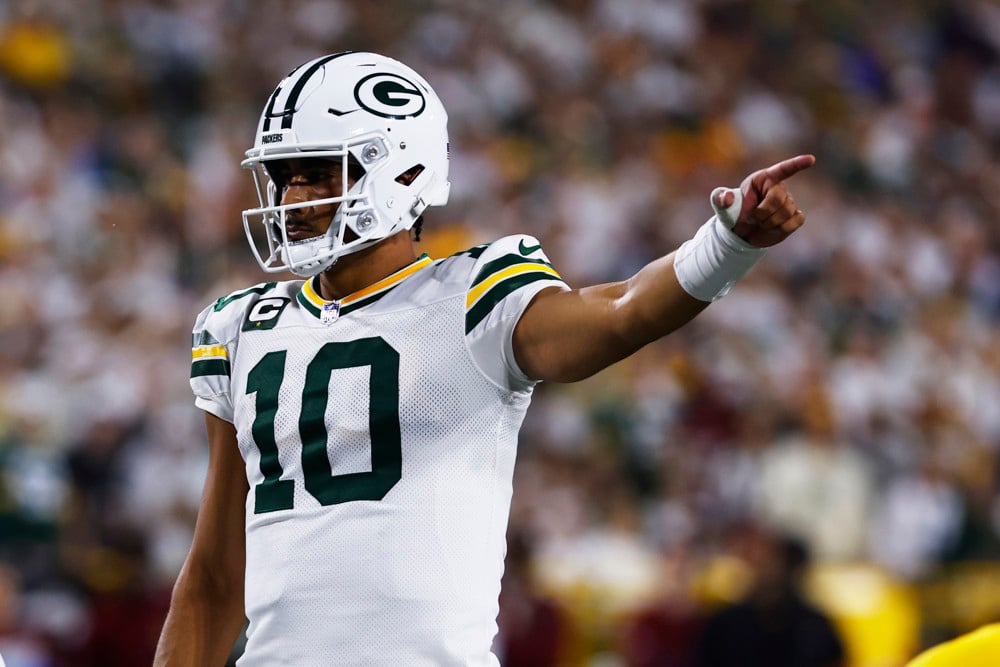
While these division rivals have not played voluminous contests lately, this is the favorite for fantasy-friendliest matchup on the main slate. Their last meeting yielded a middling 60 snaps apiece on Thanksgiving, along with a side of 55 points and four touchdown passes for Jordan Love. Yet, these Packers are not those Packers. Last year, Green Bay ranked 21st in PROE (-2%) and 24th in neutral pass rate (53%). This year, the Packers are eighth in PROE (+4%) and eighth in neutral pass rate (61%). With a +0.1 neutral pace over expected, and +0.5 over the past month (10th), they are playing faster than a year ago (-0.9). Green Bay’s games are top 10 in combined snaps compared to 24th in 2025. The Packers also rank ninth in explosive play rate (11%), and the Lions allow big plays at the league’s highest clip (12.8%).
Detroit was on bye last week after dropping 45 points on the same Cardinals defense that somehow held the Rams to 16 points on Sunday. The Lions rank top three in EPA per play, success rate, and points per snap on offense — and no one surrenders more EPA per play on defense. Also, the Packers aren’t the only ones playing faster. Detroit’s neutral pace over expected has risen from ninth to third, and the PROE jumped from -5% to -1%. The Lions average the ninth-most play-clock seconds remaining, and no other team’s games yield more combined snaps (134.2). Couple that with contests featuring the most total points (62.4), and it’s not hard to see where this is going. The matchup boasts the highest total of the week and will be the first stop when building lineups. Who are we to argue?
Los Angeles Rams at Las Vegas Raiders
There is panic in the streets over the Rams. Davante Adams is hurt and Puka Nacua is pre-hurt. Sean McVay is pressing and wants a broadcasting gig. Matthew Stafford is (checks notes) getting old. Looking like something McVay scraped off his shoe against the Cardinals was undeniably jarring and will scare some folks off. Good. The offense hasn’t been bad, or even just average. Los Angeles is 12th in explosive play rate, 11th in EPA per play, seventh in yards per play, and sixth in success rate. These guys just need a weekend in Vegas capped off by facing a defense ranked dead last in EPA per play over the past few weeks. Stafford, who has been apocalyptic against pressure (37.9 passer rating versus 113.1 from clean pockets), will get LT Alaric Jackson back from a one-game suspension against a pass rush that’s averaging half the sacks in the last two games (1.5 per) as the first four (3.0).
Raiders games have been a blast all year, not only due to a paper-tiger defense that proved fraudulent against actual opponents, but because the offense has juice. Vegas’ contests rank fifth in full-game explosive play rate and fourth in total points (54). Kirk Cousins is snapping the ball with the sixth-most play-clock seconds remaining on average, despite slowing down a bit on Sunday against the Bills. The offense deploys the seventh-highest neutral pass rate (61%) after registering a 66% mark against Buffalo. Vegas’ defense is a pass funnel, ranking 24th in dropback EPA per play and ninth against the run — while the Rams are fifth in neutral pass rate (62%). Rams games yield the third-most combined snaps and Raiders contests the sixth most. Best to forget all the worries in Los Angeles and come party in Vegas.
Slow-Paced Slogs
San Francisco 49ers at Atlanta Falcons
Like their owner in a trailer park, the 49ers’ offense is about to get a little strange. San Francisco will likely be forced to pivot from its early-season profile with Mike Evans joining a growing list of injured wideouts. Heading into Monday night, the 49ers ranked sixth in PROE (+3%), 12th in neutral play-clock seconds, and 14th in neutral pace over expected. That likely will not fly without the recipient of 14 explosive pass plays (fourth most). Evans’ final Achilles aggravation came on a catch late in the second quarter. Before that, the 49ers averaged 5.1 yards on 16 carries, and Brock Purdy was 16 of 20 for 195 yards and a touchdown. Once Evans left, San Francisco gained 3.5 yards on 13 carries, and Purdy was five of nine for 54 yards and two sacks. They managed one field goal after halftime, and with a less explosive, less efficient attack, expect the 49ers to return to their recent roots with a methodical offense that takes advantage of a defense ranked third in EPA per play.
If the 49ers are not pushing the pace in this matchup, play volume will be rarer than a Tua Tagovailoa seven-step drop. Since Michael Penix Jr. returned, Atlanta has been pass-heavier — but still 25th in PROE (-3%). The Falcons are 26th in neutral play-clock seconds and 31st in neutral pace over expected during that time. After giving Bijan Robinson only nine carries while he was averaging 6.8 yards a pop — and deploying a 71% pass rate during the tight first half of last week’s home loss — we can expect a heavy dose of handoffs to highlight Atlanta’s game plan. The 49ers only allow 90.2 rushing yards per game, but they surrender the ninth-highest rushing success rate. If the Falcons manage to sustain drives via Robinson runs, and do it while operating at a deliberate pace, they’ll join San Francisco in crushing the game clock. If that’s the case, we’ll want to stick to the usual suspects and not dig into any ancillary pieces despite the main slate’s third-highest-projected total (50.5).
Miami Dolphins at New York Jets
The bye gave the Dolphins an extra week to catch their breath — well-timed after blowing for five straight weeks. Now it’s back to sucking snap volume, and no team partakes in games with fewer plays. Miami’s contests rank last by many miles in combined snaps (114.8) — a full play lower than the Dolphins’ last-place average a season ago. Maybe it’s for the best that Malik Willis is passing less than half the time during neutral situations — he ranks 37th of 37 quarterbacks in adjusted completion rate — but it’s terrible for play volume. Combined with the fourth-slowest neutral pace over expected, game clocks drain even faster than Dolphins fans’ will to live.
Speaking of existential dread, the Jets are in town. They are coming off a closer-than-it-looked 26-19 rock fight in New England in which they deployed a 45% neutral pass rate (second lowest) and their third straight negative PROE (-6%; fifth lowest). With Braelon Allen averaging 4.6 yards per carry and, for the most part, keeping the offense on schedule, Aaron Glenn will likely run the approach back against a Dolphins defense allowing the sixth-highest rushing success rate and facing the sixth-highest neutral run rate. New York’s games are more voluminous than Miami’s but still are tied for 10th lowest in combined snaps. With both teams’ contests featuring about as much scoring as a fantasy football conference — ranking 29th (39; Jets) and 26th (40.4; Dolphins) in total points — best to seek more exciting environments elsewhere.
Indianapolis Colts at Minnesota Vikings
You don’t need to stalk the sideline with a headset and pen to know these Colts are more disappointing than a well-done steak. We can’t ask for a do-over, so general avoidance is our only remedy for now. It is less about the offensive results — Indianapolis has faced mostly tough defenses — than the listless approach. Consistently fast-paced under Shane Steichen before Daniel Jones’ injury, the Colts rank 25th in pace and 23rd in no-huddle rate during neutral situations. Perhaps Jones isn’t yet ready to crank the tempo — and with six interceptions and four fumbles already, his offense has more mishandled balls than a junior prom afterparty. Still, the Colts are 27th in explosive plays (8%), miss field stretcher Alec Pierce, and, as is his custom, Jones’ average depth of target is a non-threatening 8.4 yards (18th). Indianapolis’ games are 26th in combined snaps over the last month as the offense ranks 25th in play-clock seconds at the snap, and it’s about to try to kick the NFL equivalent of a lead balloon.
The Vikings got an extra week to rest as they continue to collect offensive souls across the league. Minnesota’s defense ranks first in points and yards allowed — first and third on a per-play basis — as well as first in pressure rate and, by a million miles, blitz percentage (66%). Jones averages 5.6 yards per blitzed attempt. Vikings games rank 31st in combined snaps, thanks only to the Dolphins not playing real football, and 32nd in total points (34.6). Despite all the blitzing, Minnesota allows the eighth-lowest explosive play rate (8.5%) — an area in which the Colts are impotent anyway. The Vikings’ offense operates at the sixth-slowest neutral pace over expected and deploys the eighth-lowest neutral pass rate (54%). We expect Kevin O’Connell offenses to be faster and more pass-leaning, but with a rabid defense, new quarterback, and undefeated record, our pace-based priors have long been changed.
No-Huddle Notes
– Despite the whopping 140 combined plays produced by the Saints-Giants contest, New Orleans hit the pace brakes. The game was heading for a below-average 120 snaps before a frantic 49-play fourth quarter — thank you, J.J. McCarthy. The mostly sleepy script was largely due to an injured Tyler Shough and a drastically different offensive approach. With the Saints finishing 23rd in rushing success rate on the week, and 25th on the season, it’s clear they didn’t pivot to the ground by choice.
New Orleans ranked seventh in PROE when Shough broke his left hand in Week 4 (+3%), and since then squeezed out two -9% rates — which would rank second lowest on the full season. The Saints also registered their lowest play-clock seconds average of the season, by far (8.5; 18th). They, of course, ranked first before that. We’ll see if Shough’s hand is healthy enough to hand off with on Sunday morning, let alone hit the throttle hard enough to push the slothy Steelers.
– Pittsburgh is fully back in an offensive shell since losing to Cleveland in Week 4. Aaron Rodgers again tossed long handoffs the last two games, with spiked completion rates and slashed aDOTs of 4.3 and 4.2 yards. The problem is they’ve won both, so it’s foolish to expect change. Rodgers is increasingly wasting time before the snap — his neutral play-clock seconds have dropped from 8.1 seconds after Week 2, to 7.3 seconds the next two games, to 6.3 and 5.4 the last two weeks. The Steelers rank last over the past month. There is laughably little time left when Rodgers gets the ball, and no matter how high their pass rate is, play volume stays capped. If the Saints remain slowed, we shouldn’t sweat sleeping in on Sunday.
– Sean Payton trusts Bo Nix about as far as Nix is throwing the ball these days. His average depth of target is a career-low 5.0 yards after his third sub-five-yard mark in six games on Thursday. The Broncos had a 50% neutral pass rate, easily a season low. It has essentially fallen weekly since a 74% clip in the opener. They ranked fifth after the first month (63%). It’s been 56% and now 50% since.
The worrisome thing is Payton isn’t trying anything to shake Nix out of it. He’s just turtling. The Broncos were supposed to be a faster-paced team than last year, when they already played at an elevated tempo. Denver used the no-huddle to spark Nix and the offense down the stretch a year ago, and it worked. Now Payton won’t even touch tempo. A disappointing 11th in no-huddle rate after the first month (7%), they’ve had a 2% rate since. Perhaps a date in Arizona will give Payton, and, in turn, Nix, the confidence to start wearing their ovaries on the outside again.
– The Browns and Titans must be the Pace Gods’ idea of a joke. Tennessee is fourth in neutral pace over expected, but 30th in points per snap. Cam Ward is less efficient than a submarine screen door. Cleveland ranks third in neutral seconds per snap, but 29th in points per snap. Deshaun Watson is last in sack rate — on brand for a guy who’s had trouble with escaping sacks.
These offenses, for the most part, play fast — and, for the most part, only infuse their opponents with snap volume. The Browns are bottom 12 in plays differential (-4.2 per game) and the Titans are dead last (-12.8). Sunday’s meeting, which is a better fit for Thursday night, has some car-crash appeal. Like dry-humping eunuchs, no matter how fast these offenses move, they simply can’t score.
– It was not pretty, but Panthers-Eagles delivered serious play volume (135 combined snaps), and Philadelphia did not need to be dragged along. With Tanner McKee starting in place of Jalen Hurts, the Eagles unleashed the highest neutral pass rate of Week 6 (79%). Their PROE topped all non-McKee Eagles games in the last year (+11%). Philadelphia finished seventh in neutral pace on the week — up from 15th before kickoff.
McKee was mostly risk-averse, with a middling aDOT and few completions beyond 10 yards. He did find some success as the game wore on and gets a far friendlier foe on Monday night when the Cowboys limp into town. Carolina allows the 16th-most EPA per dropback and Dallas the league’s most. Eagles games are up to eighth in combined play volume, and the quarterback change might just move them higher.